
With housing prices falling and mortgage interest rates rising, it’s hard to say the housing market has bottomed out.
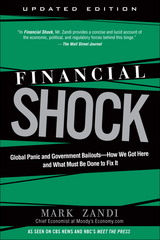
And yet, there are some reasons for a more optimistic housing forecast, according to Mark Zandi, chief economist for Moody’s Economy.com and author of Financial Shock (2nd Ed.).
“The forecast of a housing market bottom is a reasonable one in that a bottom is coming into view,” Zandi explained in a recent interview.
The first step in calling a bottom to the housing market is seeing more stable housing demand.
“The home sales data suggests that demand is stabilizing. Since last year, new and existing home sales have stabilized. It’s not going up, but it’s not going down either. About half of the existing ales are distressed foreclosure or short sales, and that’s part of finding a bottom,” he explains. “I view that as therapeutic.”
Zandi said that builders have gotten control of their inventory, which is down from the peak in earlier 2009.
The second step in calling a bottom to the housing market crisis is for property prices to stop falling. Zandi believes that housing prices will fall another 5 to 10 percent, forming a bottom at around 40 percent below the high set several years ago. But it could take until Spring 2010 to get there.
“Most of the price declines are occurring now. But we’ll see a big decline this summer. We will see foreclosures surge this summer” which will bring housing prices down further, Zandi said.
Thanks to the decline in housing prices, housing affordability is at the low end of average right now. But a sudden jump in interest rates could turn that around.
“If fixed interest rates rise above 5 percent for very long it will be a problem in terms of the housing market recovery,” he said. “Hopefully the Federal Reserve steps on the accelerator and gets rates back down.”
But there is one area that worries Zandi: Loan modifications. “The key threat or risk to the economy is whether the policy efforts start to work to stem the rise in foreclosures. This is really important to finding the bottom to the housing market and also, more broadly, the end of the recession and the beginning of economic recovery. The president’s loan modification plan has to kick in soon, otherwise all this optimism with regard to the end of the recession and housing market will be misplaced,” he explained.
Zandi said that policy makers are working on adjustments to the current loan modification plans, including adding cash incentives for second mortgage holders willing to modify loans and for borrowers who pay these new loans on time for a period of years.
“If you look at the Administration’s loan modification plan, it’s lucrative for plan servicers. You’d think they would step up. They say they are, but we need to see it,” Zandi said.
Zandi said one reason we’re not seeing even more loan modifications is that servicers are “overwhelmed and don’t want to invest. The Administration was hoping that by paying [servicers] a substantial dollar amount to engage in modifications, it would get them to beef up [their staff] and invest more and do more, but it feels like they’re overwhelmed. It’s another reason to be concerned,” he added.
“The key to the housing market bottom is this: the day the foreclosure and short sale share of total sales peak is the day that housing prices will bottom.”
Zandi also believes that jobs are a key element to the economic recovery. Predicting that the unemployment rate will top out at 10 percent in early 2010, he says we may have a few months where the unemployment rate exceeds that level.
He also said that we may start to see the effects of the stimulus wear off early next year. While the U.S. may experience a double-dip recession (also known as the “W”), he thinks it’s likely that Congress will approve another, smaller stimulus package to keep the country moving in the right direction.
“It won’t be $800 billion, but maybe the policy people will put up $250 to $300 billion to ensure we don’t have double dip recession. We’ve had one double dip recession in the post World War II era and that was when the Federal Reserve was monkeying around with efforts to stem inflation.”
Buy Mark Zandi’s book, Financial Shock (2nd Ed) at Amazon.com.
Read more: Housing Market Data Shows Housing Crisis Ongoing, Economists Predict Recession End Soon, But Recovery Slow and Credit Crisis: Are We Facing Financial Armageddon?.
June 4, 2009



Leave A Comment