
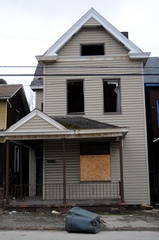
Q: I entered into an agreement with an investor/Realtor in 2006 where he was supposed to purchase my home and pay off my loan if he was unable to sell my home in 12 months. It has been three years, and he hasn’t sold my home. Not only that, this person has also placed the title of my home in his name using a quit claim deed but left the mortgage in my name. What can I do?
A: Honestly, I can’t believe it has taken you three years to reach out and ask for help. The moment the so-called investor/Realtor asked you to put the title to the property in his name using a quit claim deed but keep the mortgage in yours, you should have refused and immediately picked up the phone to call the police or the FBI.
What I’m trying to say is you’ve been scammed. What you describe is a classic mortgage fraud scenario.
Housing Scams and Mortgage Fraud Grew in 2008
But you’re not the only victim of a housing scam or mortgage fraud. According to the FBI’s 2008 Mortgage Fraud Report, the recession has only increased the number of housing scams and mortgage fraud taking place in the U.S. Here are some of the highlights of the latest report on housing scams and mortgage fraud from the FBI:
1. Mortgage fraud continued to be an escalating problem in the United States during 2008. Although no central repository exists for collecting mortgage fraud complaints, virtually all law enforcement and industry statistics indicated an upswing in mortgage fraud activity. The number of mortgage fraud filings from financial institutions increased 36 percent to 63,713 and while the total dollar loss attributed to mortgage fraud is unknown; at least 63 percent (1,035) of all pending FBI mortgage fraud investigations during FY2008 involved dollar losses totaling more than $1 million.
2. A decrease in loan originations and an increase in defaults and foreclosures continued to dominate the downward trend in the housing market in 2008. While the amount of mortgage fraud cannot be precisely determined, industry experts agree that there is a direct correlation between fraud and distressed real estate markets. As the housing market continued to decline in response to an increase in housing inventories, lack of sales, and new foreclosures surface, to include a wave of Alt-A and Option ARM loans due to reset beginning in April 2009, real estate values softened, and fraud reporting increased throughout 2008.
3. Mortgage fraud is higher in states where unemployment and foreclosures are surging. Analysis of available law enforcement and industry information indicates the top states for mortgage fraud during 2008 were California, Florida, Georgia, Illinois, Michigan, Arizona, Texas, Maryland, Missouri, New Jersey, New York, Ohio, Colorado, Nevada, Minnesota, Rhode Island, Massachusetts, Pennsylvania, Virginia, and the District of Columbia. Rhode Island, Massachusetts, Pennsylvania, and the District of Columbia were new to the list in 2008, replacing Utah, Indiana, Tennessee and Connecticut from 2007.
4. The downward trend in the housing market during 2008 provided a favorable climate for mortgage fraud schemes to proliferate. Several of these schemes have the potential to spread if the current economic downward trend, as expected, continues beyond 2009. Increases in foreclosures, declining housing prices, and decreased demand place pressure on lenders, builders, and home sellers. These and other market participants are perpetuating and modifying old schemes, including property flipping, builder-bailouts, short sales, and foreclosure rescues. Additionally, they are facilitating new schemes, including reverse mortgage fraud, credit enhancements, condo conversion, loan modifications, and pump and pay in response to tighter lending practices.
Contact an attorney immediately to see where you are with this, if the investor/Realtor has taken out another loan for the property, and if you can resolve the situation or need to take legal action.





In order to fix my moms credit,the broker got me to take out a 7200.00 loan at a bank in the town where i live.Even though i didnt have nowwhere the credit score i needed to get an unsecured 7200.00 loan.The morgage broker owes me money on the so called deal. What do i do or who do i contact?
Housing fraud has been going on for along time, and the government will not do anything about it. Why because the banks and wall street is making to much money on it all. You buy a house or build it yourself. Most will get a mortgage, some will build it as they have the money. You work hard all your life. Your spouse dies a southern death. Your investments was lost after 9/11. If you have a business, you need more money to support your business. You remortgage your home. You have a few appraiser come to your home, some the mortgage company send them even well your home was just appraised. You have a problem, your behind in your mortgage. You try to straighten it out. Business is slow. You try for help with your mortgage company .All you get is a run a round .Your home is worth 220,000. Your mortgage is 130,000.Your Bank starts a to forclose.. Your old enough for a reverse mortgage. You try for it.. At same time a stranger or a scam arts gets a copy of your deed from the hall of records, a copy of your drivers license, and a copy of your husbands death certificate. He has all this throw the freedom act. You get a letter Rent with option to buy. Your confused, what just happened. You call your mortgage company. They tell you, you just sold your home. You want to know how this could have happened. You go to the internet to see what to do. You do all the things it said. No one can help you. On the same day you receive the letter rent/option to buy, you receive a mortgage letter for a payment, with your address in an others person name, with a few documents. Plus a credit report for that same person. You call the DA’s office in your county. They have you fax them the documents you received . They send you to the fraud until in your county, which is the attorney general. They take your statement, and then tell you that they can not help you get a private lawyer. You try 30 defend lawyers they will not help you. You go back to the DA’s office. They investigate for a couple of days. They call the scam arts and the title ins agency. Next day they call him back. They send him a few documents. The DA’s office tried to get the notary his phone was turned off that morning. They close the case. At the same time your getting letters from mortgage co. in that others person name. He’s trying to remortgage the house for more money. You call the scam arts mortgage co. they give you there fraud until. All the copies of the mortgage documents are sent to you. The signatures are not yours .You go back to the DA’ office and give them these documents. This means nothing because they will not reopen the case. They county can not afford to take a case like this .Case is closed they claim you signed the documents, even well the DEED of transfer signature of yours is misspelt. and the so called settlement Signature is misspelt too. You right to the FBI and send them all the documents. You never her from them. Your home is broken into buy the so call new owner. The police come, let him go, and say its a civil matter. Legal aid can help you with the eviction, but not the rest of the case. The case is dismissed. The so call new owner files again. At the same time I found a private lawyer. He started a law suite, and had the second eviction dismissed. You think your lawyer knows what to do. They bank started another case In another court against the so call new owner. My new lawyer did not answer them until to late. He made more mistakes. Keep on quieting and it was a part of his plan. He did not send all the affidavits. In the mean time I was paying him. I got to hand writing examiners, they said the documents was forged. The third hand writing examiner I got in righting. I wrote to the state governor. He sent the sr. investigator, and Helped me put in complaints in the state license burial. I have a letter I was defrauded. The license burial could not find the notary and revoked the notary’s license for good. The appraiser made a deal with the license burial, that she would lose her license for 45days, go back to school, and can get recertified. The HUD documents was not HUD’s legal document. The Title INS Agency did not have to have a license in NYS. The so call broker/buyer had no license. No one had my power of attorney, nor promise to pay my mortgage off. I was back and force to court. The bank lawyers found loopholes in the mistakes my lawyer was making with the court documents. After the third time my lawyer quite, I asked the court to help me find a new lawyer. The new lawyer helped me get an appeal with the appellate. We won. Sent back to the same judge. At that time my lawyer met her new husbands. She was giving up most of her cases to move to another state. The bank asked for a summary judgement for Equitable subrogation. The judge granted it to them. There was no trail. I lost. I could not even able to appeal it, because I had 20 days to appeal and my third lawyer did not have all the documents to appeal it in time. There is something very wrong in our courts, when a judge will not look at prof of all the wrong doing and cares more if about court procedures are correct.
Forgery has become legal. Documents for a mortgage can have more then one address for one person. There dose not have to be a CO on a addition, to the home. The house can be recorded as a mobile home in the hall of records when the bank gives a mortgage on a ranch home. Death certificates dose not have to be the original with the state seal. You do not need power of attorney to sign documents with out the person being there. A notary can sign documents in an other county with a copy of a divers license. You do not need legal HUD documents. All documents can be done in one day, even Title. Pay off check to your mortgage co. can be made out six days after the new person becomes the owner. So call new owners are a loud to brake into your home with out promise or court order. Admittance to a crime is O’kay. Fraud is legal. So call new owner will try and rent the home for less then there mortgage payment. Deed of transfer forged is legal if it is recorded. Banks are aloud negligent. Banks are aloud to get the mortgage Ins. to pay them off if the mortgage is late after 91 days. Credit reports are aloud to have mistakes. Banks will pay more money then the house is worth to there lawyers so that they do not have to go to trail, and that the victim becomes broke. The scam arts are aloud to go free, and the victim becomes homeless. Most Victims are seniors trying for a reverse mortgage. I’m not only 70 years old but because of this I lost my business, sold most of my valuables and what I have left will have to be sold if I’m lucky and become homeless. Would you say there is something wrong with cases like these, when one person (a judge) awards the bank for everything so that they can get ride of the case, after 7 years being in court.